.png)


Key Takeaways
- CEOs and company owners need a clear view of business health without getting pulled into the day-to-day details behind every reservation or pricing decision.
- The most useful executive reports connect company performance with larger strategic questions: Is the portfolio growing? Are we keeping pace with the market? Is revenue moving in the right direction? Are we gaining or losing competitive ground?
- A focused reporting routine helps leadership identify meaningful changes in performance, portfolio health, and market position and know when a deeper look is needed.
Running a vacation rental property management company requires visibility across many parts of the business. Revenue matters, but so do portfolio growth, owner retention, market position, and the pace at which future business is building.
For CEOs and company owners, the challenge is not accessing more data. It is knowing which information deserves attention at the leadership level. The right reports should provide a quick read on the health and direction of the business while making it easy to investigate when something stands out.
These five KeyData reports provide that perspective across company performance, inventory growth and churn, market benchmarking, revenue, and competitive booking pace.
1. PM Scorecard: Start with the Company-Wide Picture
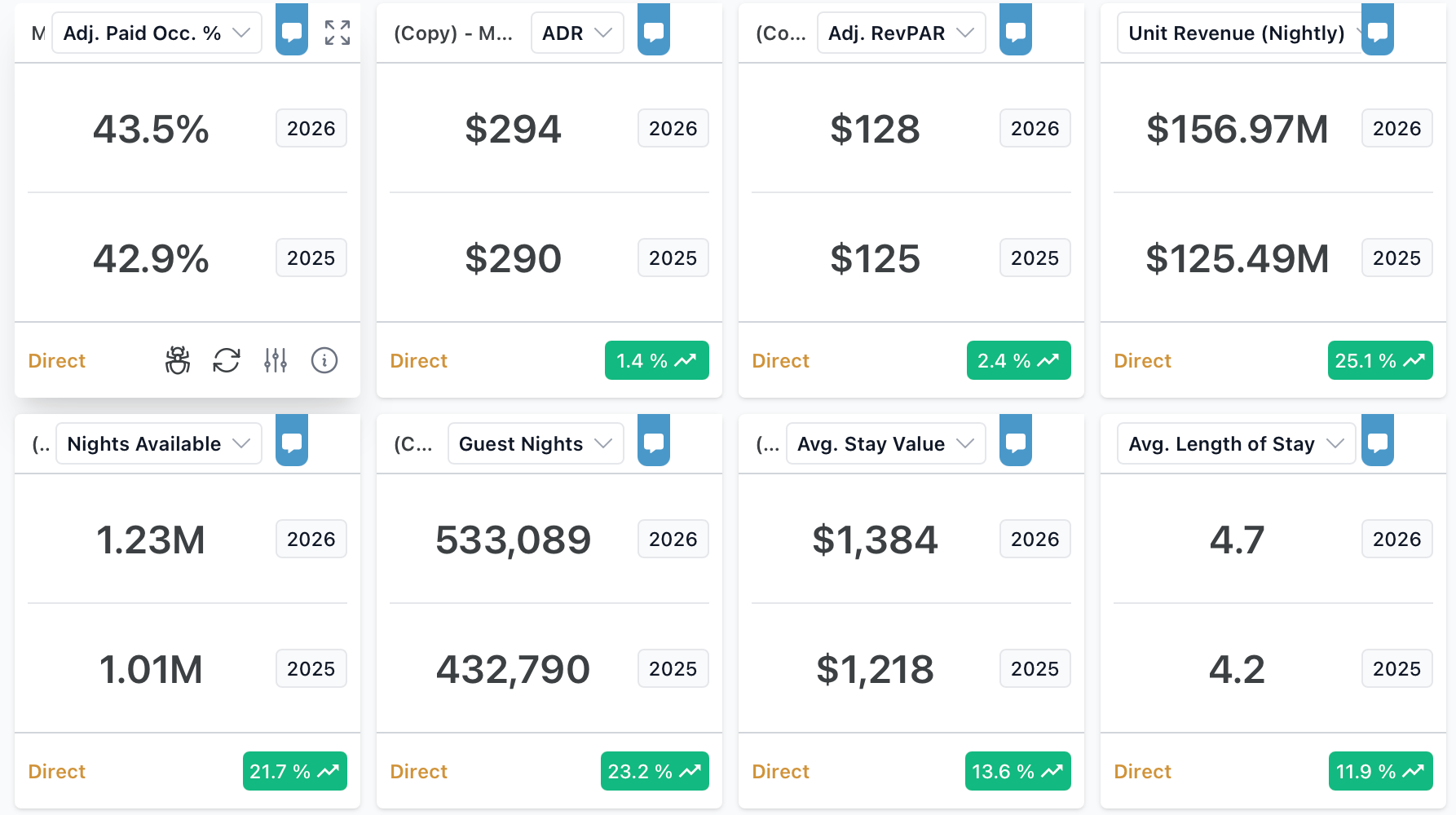
Leadership does not need to begin every performance review by digging into individual markets, properties, or reservations. A high-level view can quickly show where the business stands and whether anything warrants further attention.
The PM Scorecard provides that starting point, bringing company-wide performance into a single view. It gives CEOs and owners a quick pulse check on the business before moving into more detailed analysis.
Its value comes from consistency. Reviewing the same core performance measures over time makes it easier to recognize when results are moving outside normal patterns. A change in occupancy, ADR, RevPAR, or another key metric can then prompt a deeper conversation with the team responsible for understanding what is driving it.
For leadership, the goal is not to react to every movement. It is to stay close enough to performance to recognize when something meaningful changes.
2. Inventory Growth and Churn Benchmarking: Understand Whether the Portfolio Is Really Growing
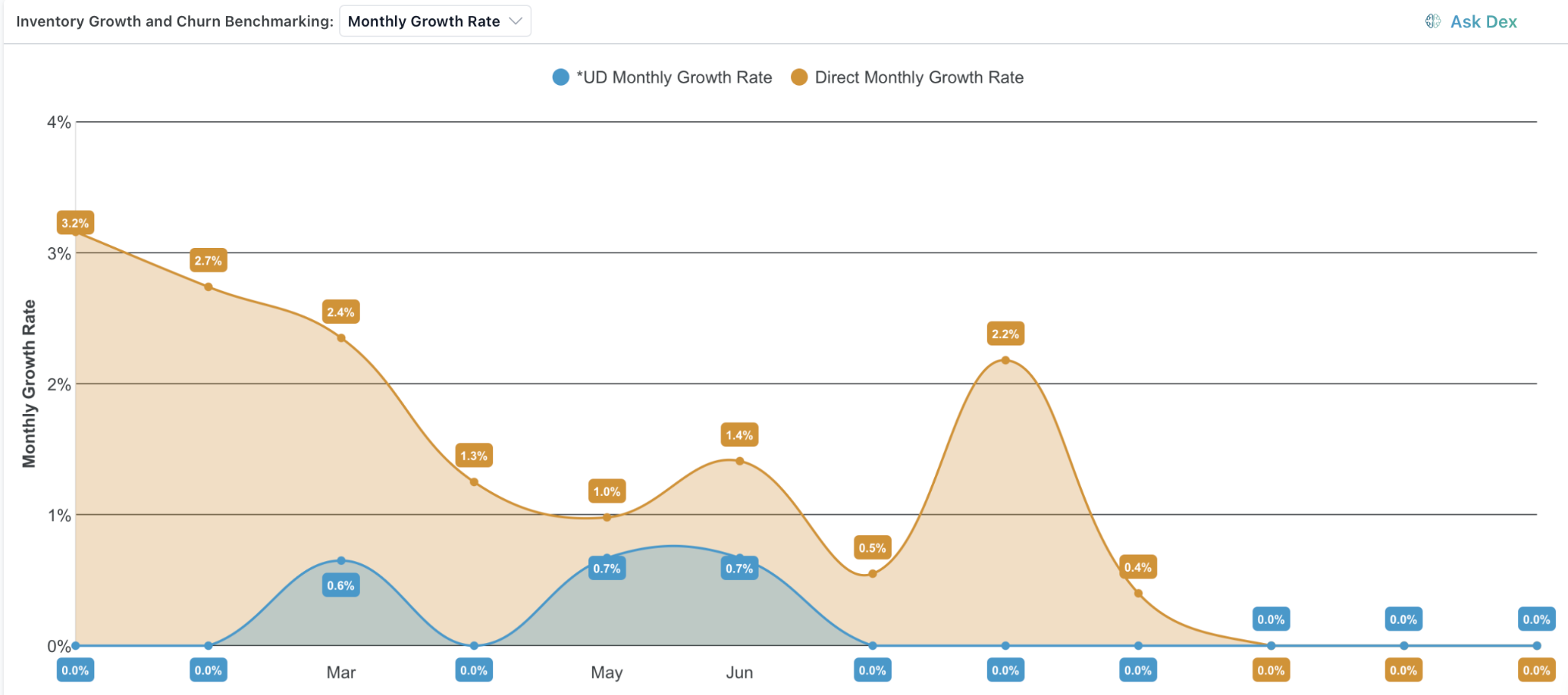
Adding properties is an important measure of growth for a property management company, but acquisition numbers alone can give an incomplete picture. Leadership also needs to understand how many units are leaving the portfolio and whether new additions are enough to offset those losses.
The Inventory Growth and Churn Benchmarking report brings both sides of that equation together while providing market context. A company may be adding a steady stream of new properties but making little net progress if churn is equally high. Conversely, strong retention combined with consistent acquisition can produce meaningful portfolio growth even without unusually high sales volume.
Benchmarking those trends against the market adds another layer of perspective. Leadership can see whether changes in inventory are unique to the company or reflect patterns occurring more broadly, helping inform conversations around owner acquisition, retention, and long-term growth strategy.
3. Market + PM Benchmarking: Put Company Performance in Competitive Context
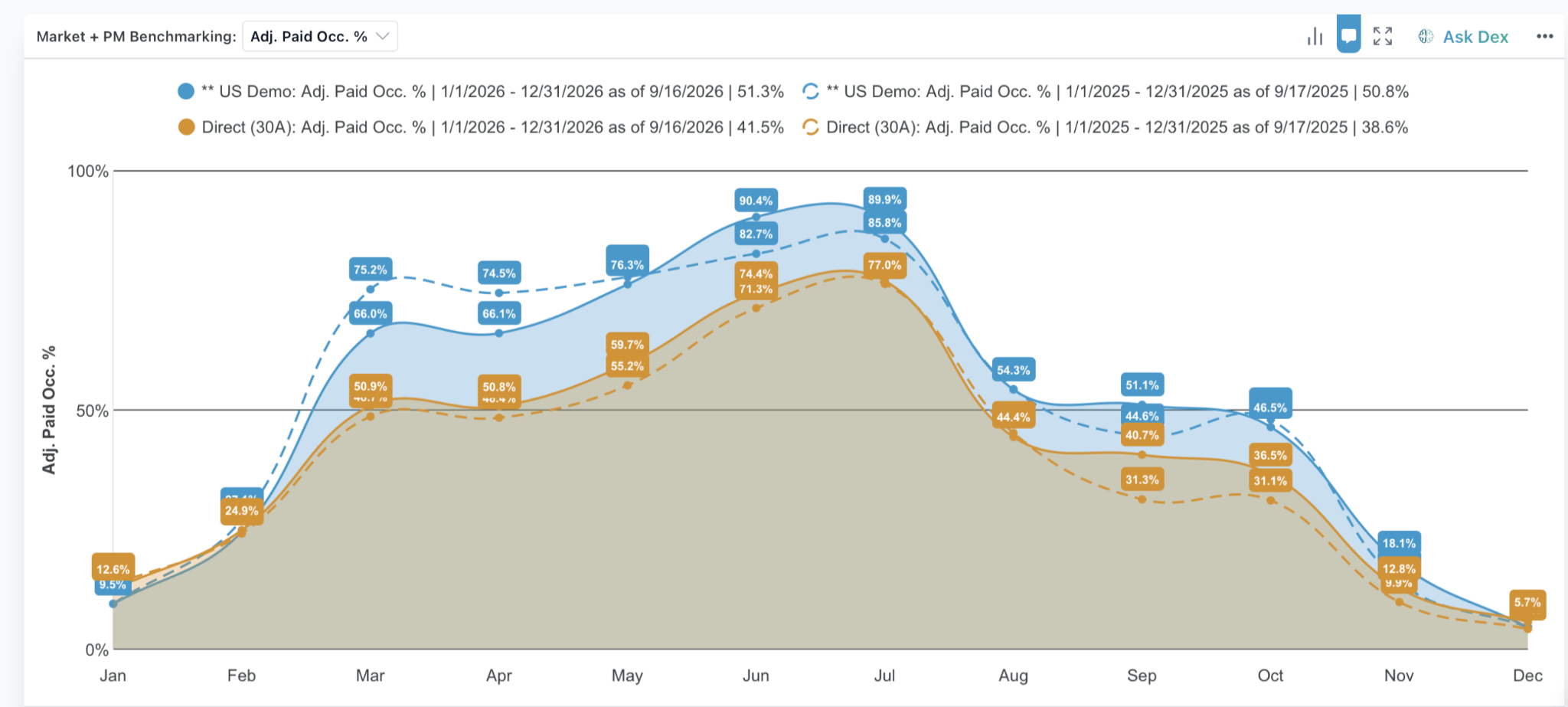
Year-over-year performance tells leadership whether the company is improving relative to itself. It does not necessarily show whether the company is gaining ground in its market. The Market + PM Benchmarking report provides that additional context by comparing company performance with broader market performance and professionally managed inventory.
That distinction matters when interpreting results. Revenue or occupancy can increase while the company still loses relative ground if competitors are growing faster. Likewise, a year-over-year decline may look different when comparable property managers are experiencing similar or greater softness.
For CEOs and owners, this report provides useful context for strategic performance discussions, including conversations with leadership teams, boards, and investors. Rather than simply reporting that a metric increased or decreased, leadership can explain how company performance fits within the conditions of the surrounding market.
4. Revenue Scorecard: Keep Financial Performance in View
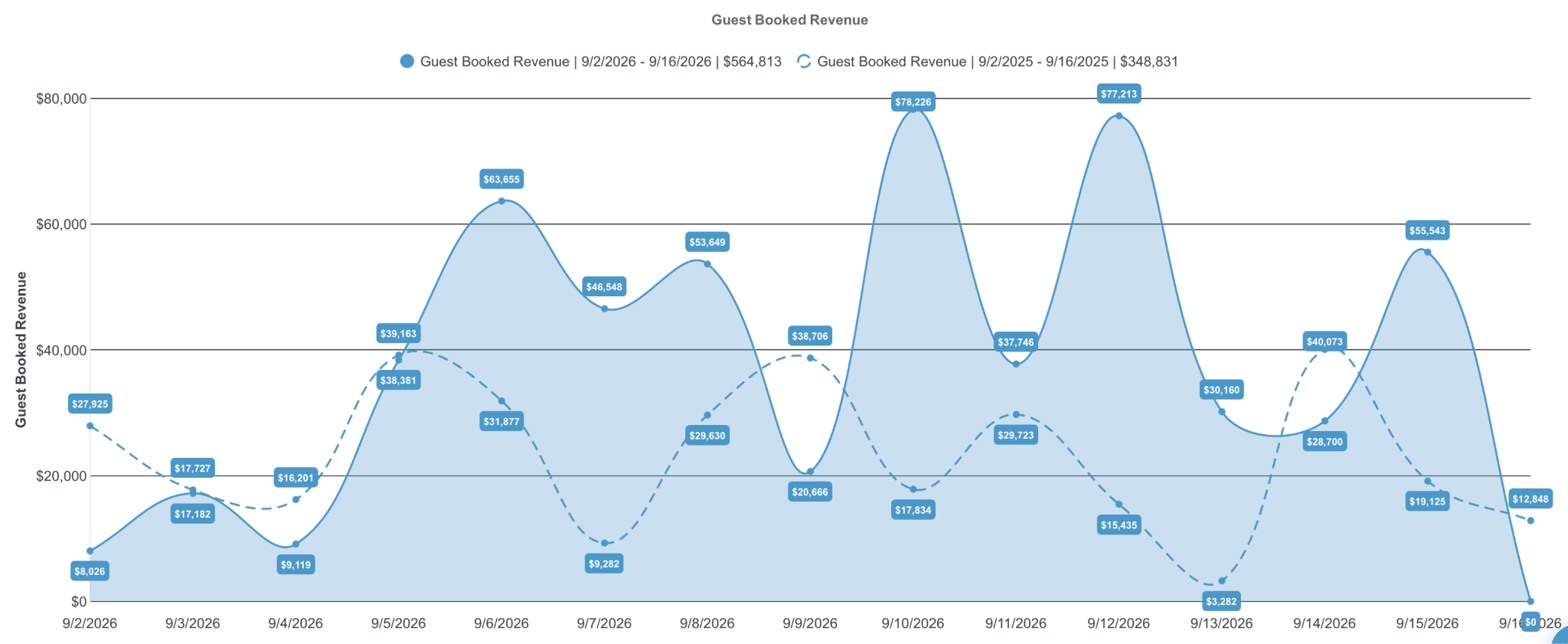
Revenue is one of the clearest indicators of company performance, but executives should not have to work through reservation-level data to understand how it is trending. The Revenue Scorecard provides a company-wide view of revenue performance, giving CEOs and owners a straightforward way to monitor financial momentum and recognize meaningful changes.
Used consistently, the report can help leadership see whether revenue is developing as expected and whether performance is strengthening or weakening. When results begin to move away from expectations, the scorecard provides a starting point for investigating what may be driving the change.
The underlying cause could be pricing, occupancy, inventory growth, booking pace, or broader market conditions. The Revenue Scorecard does not need to answer all of those questions itself. Its role at the executive level is to make it clear when those questions need to be asked.
5. Pacing Percentile Detail: Know Where Your Booking Pace Ranks
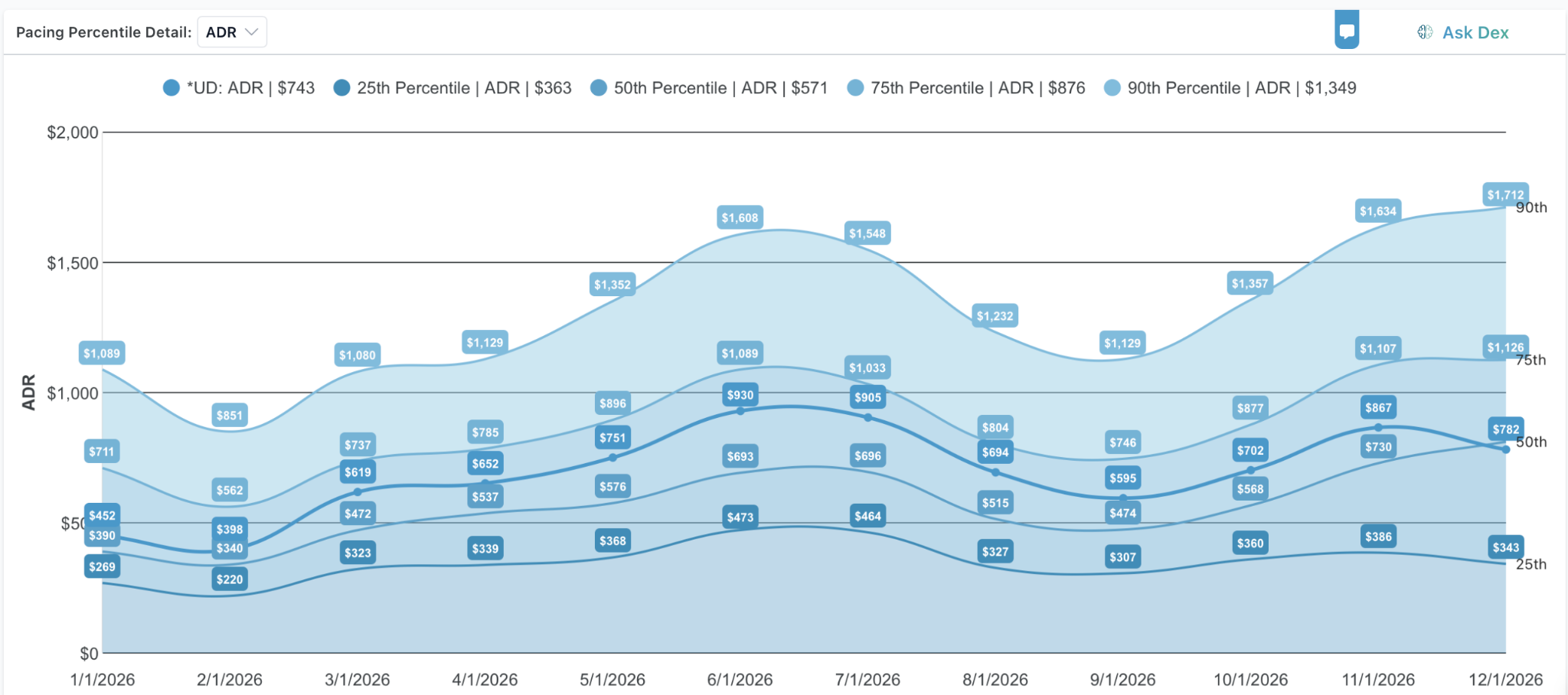
Knowing whether future bookings are ahead or behind last year is useful. Knowing how that pace compares with the market provides a different level of context. The Pacing Percentile Detail report shows where the company ranks percentile-wise against the market based on booking pace. This gives CEOs and owners a straightforward way to monitor whether the business is gaining or losing competitive ground as future demand develops.
That perspective can reveal changes that year-over-year comparisons alone may miss. A company could be pacing ahead of its own prior-year performance but still move down in market percentile if competitors are accelerating faster. On the other hand, softer year-over-year pacing may carry different implications if the company continues to rank strongly within a market experiencing broader demand weakness.
Tracking that position over time gives leadership a clean measure of competitive momentum. Significant movement can signal when it is worth looking more closely at pricing, demand, inventory, or other factors affecting booking performance.
Give Leadership a Clearer View of the Business
Executive reporting should make it easier to identify what deserves attention, not create another layer of data to manage.
Together, these five reports provide visibility into the questions that matter most at the leadership level: how the company is performing, whether the portfolio is growing, how results compare with the market, where revenue stands, and whether future bookings are keeping pace with competitors.
KeyData gives CEOs and company owners a consistent way to stay connected to the direction of the business without requiring them to manage the details behind every metric. When something changes, leadership has the context to recognize it, ask the right questions, and determine where a deeper look is needed.
Frequently Asked Questions
What reports should a vacation rental CEO or company owner review regularly?
Executive reporting should cover overall company performance, inventory growth and churn, market benchmarking, revenue, and future booking pace. Together, these areas provide a broader picture of business health than relying on revenue or occupancy alone.
Why should property management companies track both inventory growth and churn?
New property acquisition only shows one side of portfolio growth. Tracking churn alongside new inventory helps leadership understand whether the company is achieving meaningful net growth or simply replacing properties that have left the portfolio.
Why is benchmarking important for company leadership?
Benchmarking puts internal results in context. It helps leadership distinguish between company-specific changes and broader market conditions while showing whether the business is gaining or losing ground relative to comparable inventory.
What is the difference between the PM Scorecard and Revenue Scorecard?
The PM Scorecard provides a broader snapshot of company performance across key metrics, while the Revenue Scorecard focuses specifically on revenue performance. Reviewing both helps leadership understand financial results alongside the broader performance trends influencing them.
What does booking pace tell a CEO or company owner?
Booking pace shows how future reservations are building over time. It can provide an earlier indication of changes in demand than waiting for final occupancy or revenue results.
Why is percentile ranking useful for leadership?
Percentile ranking adds competitive context to booking pace. Instead of only knowing whether the company is ahead or behind its own historical performance, leadership can see how its pace compares with the rest of the market.
How often should CEOs and company owners review these reports?
The appropriate cadence varies by business and season. Company performance, revenue, and pacing may be useful to review weekly, while inventory growth, churn, and broader benchmarking may be more appropriate for monthly or quarterly leadership reviews. The most important factor is maintaining a consistent cadence so changes can be identified over time.





