.png)


Key Takeaways
- Business development conversations are stronger when reps can support their pitch with property-specific projections and real market performance data rather than relying on general estimates.
- The right reports help answer the questions prospective owners care about most: How much could my property earn? How does this management company perform? What does demand look like in my market? And can I trust this company to grow and manage my investment?
- Using consistent, data-backed reporting gives business development teams a more credible way to demonstrate value and differentiate their company from both competing property managers and self-management.
Signing a new property often comes down to proving value before the property is ever under management. Prospective owners want to understand the earning potential of their home, but they are also evaluating whether a particular property management company is the right partner to deliver it.
That puts business development reps in a unique position. They need data that can support the potential of the property and market while also demonstrating the performance and credibility of their own company.
These four KeyData reports help turn those conversations into a more data-driven pitch, from the first revenue projection through competitive comparisons and proof of company growth.
1. Rental Projections Tool: Make the Opportunity Specific to the Property
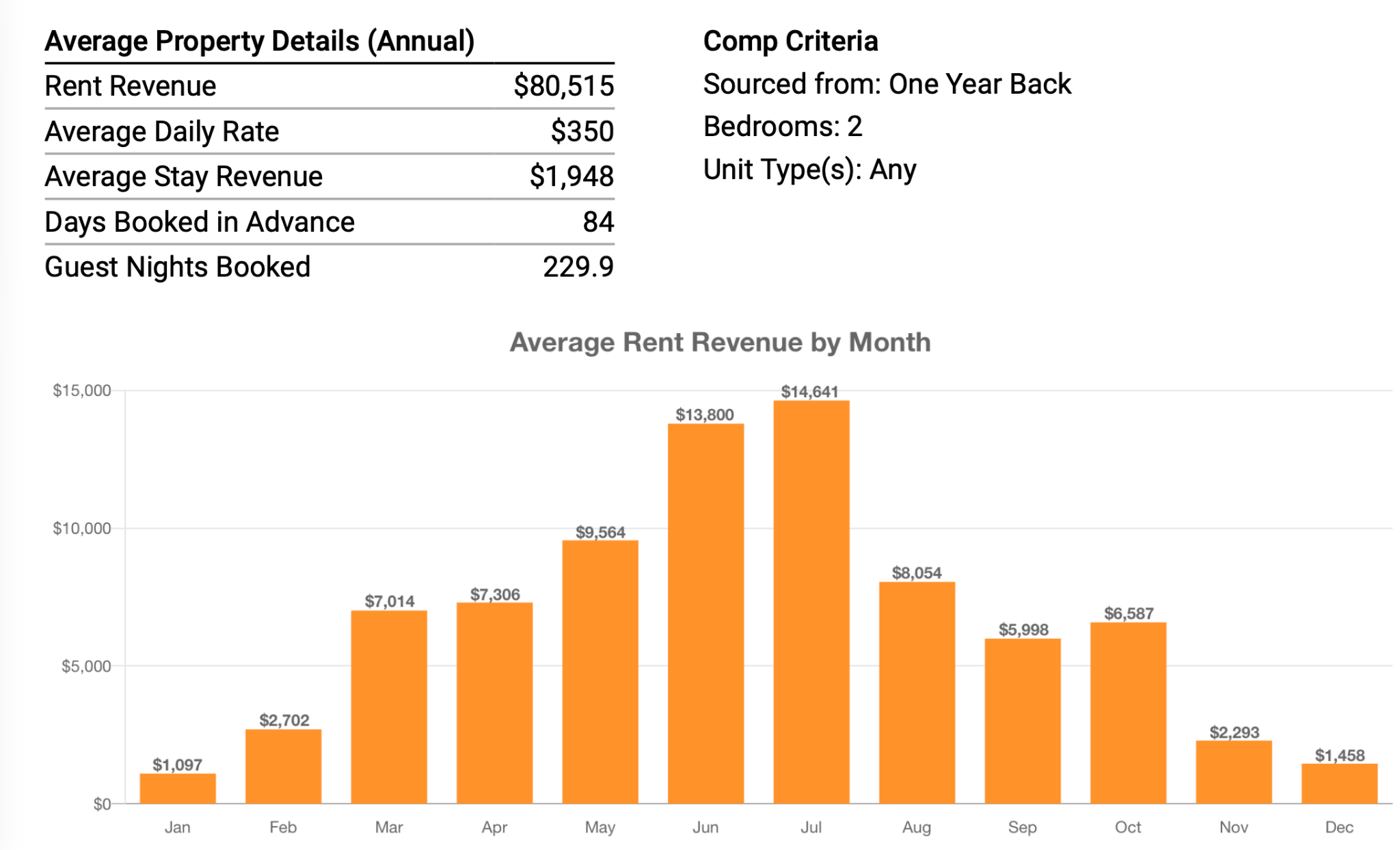
For a prospective owner, market averages only go so far. The question they ultimately want answered is much more personal: What could my property earn?
The Rental Projections Tool gives business development reps a way to ground that conversation in the property’s specific location. Using an address, reps can provide projected annual revenue and ADR while showing how the property’s potential compares across quartiles of nearby comparable rentals.
That makes the conversation more tangible than relying on a broad market average or a generic revenue estimate. A prospect can see a realistic range of outcomes based on comparable properties and better understand where their home could fit within the market.
For business development teams, the projection can also establish a more credible starting point for conversations about revenue expectations, property positioning, and the value the management company could bring to the home.
2. Market + PM Benchmarking: Show What Your Management Company Brings to the Table
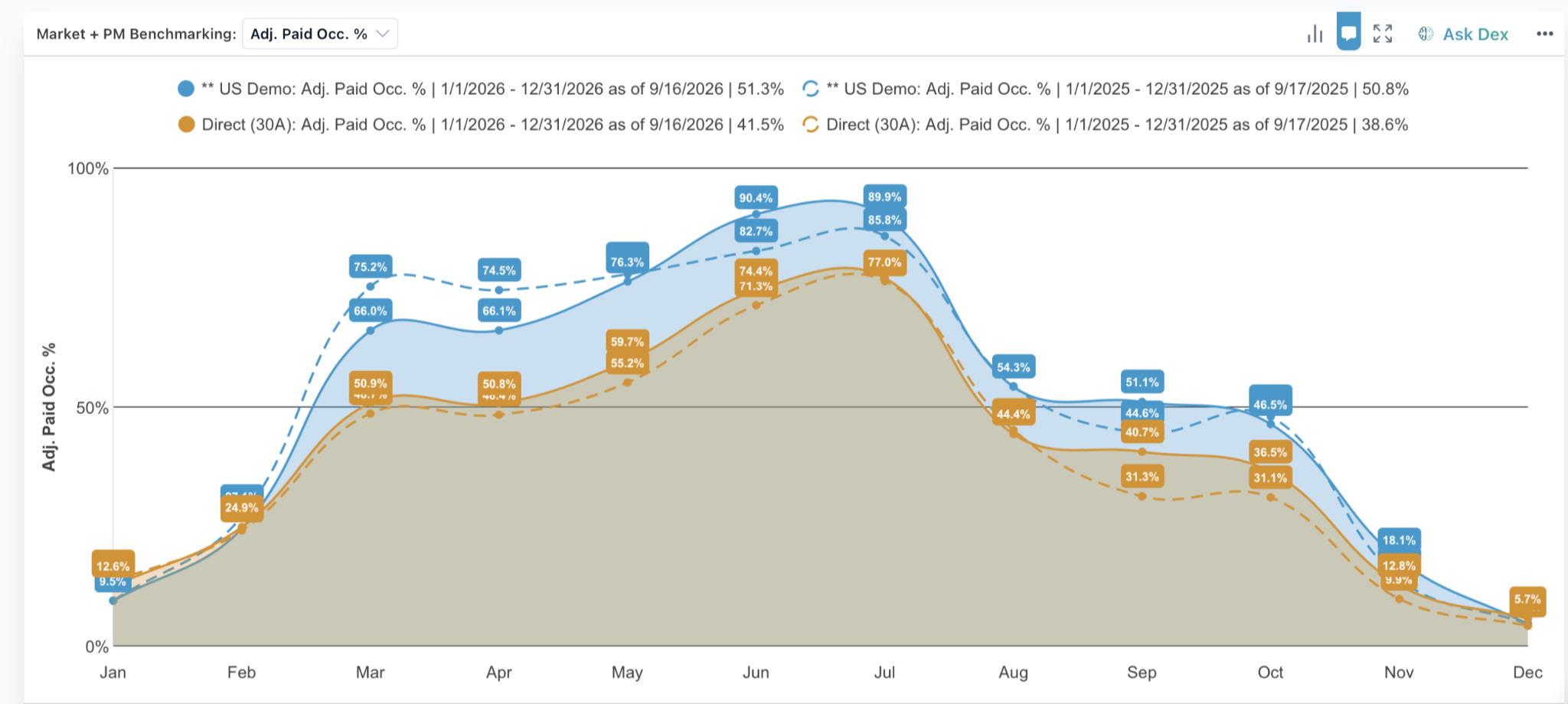
A strong market does not automatically prove that an owner needs a property manager. Business development reps also need to demonstrate what their company can contribute beyond the performance an owner might achieve elsewhere.
The Market + PM Benchmarking report compares the property management company’s results with broader market performance, providing evidence of how the company’s managed portfolio performs within the same market.
That comparison can be particularly useful when a prospect is considering self-management or evaluating several management companies. Instead of relying on claims about experience or performance, the rep can bring actual results into the conversation.
If the company’s portfolio is performing differently from the broader market, the report can help illustrate the value of its revenue management, marketing, distribution, and operating strategies and give prospects additional context for evaluating the company.
3. Market Benchmarking: Build Confidence in the Market Opportunity
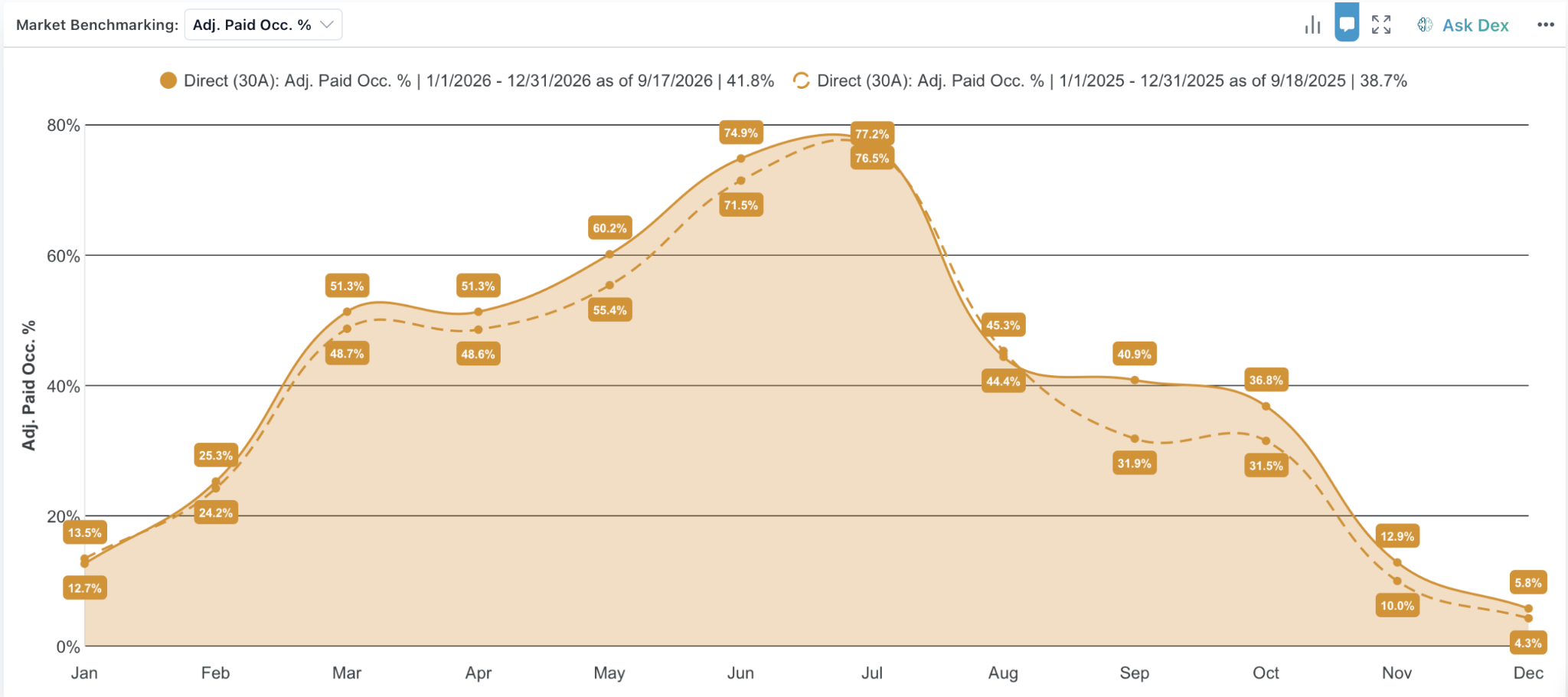
Before an owner decides who should manage a property, they may still need confidence in the opportunity itself.
The Market Benchmarking report gives business development reps a broader view of market performance and demand trends, helping establish context around the property’s earning potential.
This can be particularly useful for prospective owners who are new to short-term rentals, considering converting a property to vacation rental use, or evaluating a new investment. Rather than basing the conversation on one property’s projection alone, reps can show how the surrounding market is performing.
Combined with a property-specific rental projection, market benchmarking helps connect the individual opportunity with the larger demand environment supporting it.
4. Inventory Growth and Churn Benchmarking: Demonstrate Company Momentum
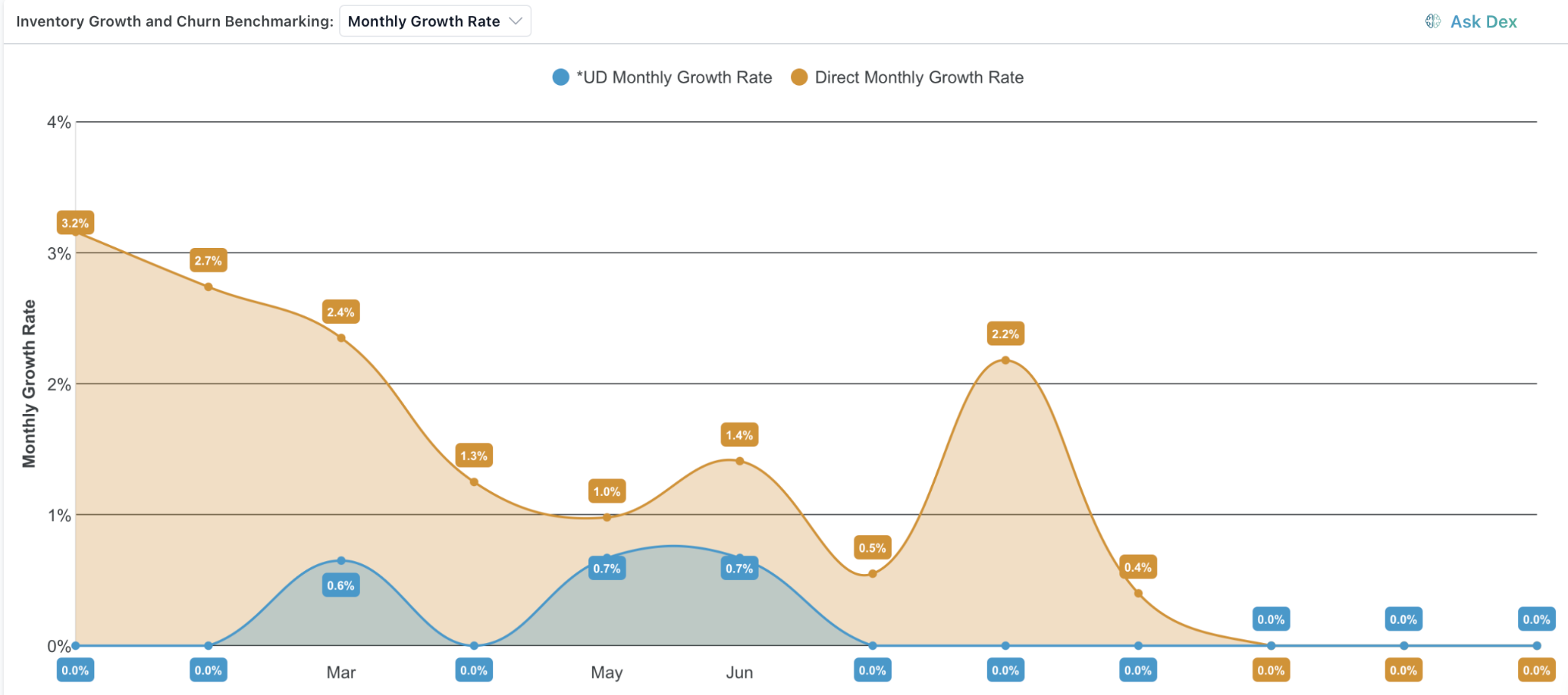
Performance metrics are important, but prospective owners are also choosing a company they expect to work with over the long term. The size and direction of a property manager’s portfolio can provide another useful signal.
The Inventory Growth and Churn Benchmarking report shows how portfolio inventory is changing relative to the market, including both growth and unit churn.
For business development reps, this provides another way to demonstrate company momentum. Consistent portfolio growth can show that the company is continuing to attract new owners, while churn provides important context around how much of that growth is being retained.
Instead of simply saying that the company is growing, reps can put that growth in market context and give prospects a clearer picture of how the management business itself is developing.
Turn the Sales Pitch Into a Data-Backed Conversation
Winning new inventory requires more than presenting a revenue estimate. Prospective owners are evaluating the potential of their property, the strength of the local market, and the company asking them to hand over management of an important asset.
These five reports help business development reps address each part of that decision with data. Rental Projections make the opportunity property-specific. Market Benchmarking establishes a broader market context. Market + PM Benchmarking and the PM Market Leaderboard demonstrate company performance, while Inventory Growth and Churn Benchmarking provides another measure of company momentum.
KeyData gives business development teams the data to move beyond broad promises and have more specific conversations about potential revenue, market conditions, company performance, and the value their management company can offer.
Frequently Asked Questions
What KeyData report is most useful when pitching a prospective property owner?
The Rental Projections Tool is a natural starting point because it makes the conversation specific to the prospect’s property. It provides projected annual revenue and ADR alongside nearby comparable rental performance, giving the owner a clearer idea of the property’s potential.
How can business development reps use data to win new properties?
Reps can use property projections alongside market and property manager benchmarks to support conversations about earning potential, local demand, and company performance. This replaces broad claims with data the prospect can evaluate directly.
Why should a business development rep show market benchmarks to an owner?
Market benchmarks provide context for a property’s projected performance. They can help prospective owners understand whether local demand supports the opportunity and how market conditions compare across periods.
Why is inventory growth relevant to a prospective owner?
Inventory growth provides additional context about the trajectory of the management company. Looking at both growth and churn can show whether the portfolio is expanding and retaining inventory rather than focusing only on the number of new properties signed.
Can KeyData help when a prospect is considering self-management?
Yes. Property-specific projections can establish the potential of the home, while property manager benchmarking can show how professionally managed portfolio performance compares within the market. This gives the prospect more information to consider when weighing self-management against professional management.
Should business development reps use the same reports for every prospect?
The core reports can remain consistent, but the emphasis should reflect the prospect’s questions. An owner focused on income may spend more time on Rental Projections, while someone comparing management companies may find PM benchmarking and leaderboard data more relevant.





