.png)


Key Takeaways
- Regular owner reporting builds trust and creates more productive conversations.
- Market benchmarks help explain performance within the context of broader market conditions.
- A consistent reporting process reduces questions by giving owners a clear view of both property and market performance.
Property owners don’t expect an update every week, but they do expect to understand how their investment is performing.
Most owner conversations revolve around the same topics. How did my property perform this month? Is that good for the market? Why did occupancy change? How do my homes compare to each other?
The quality of those conversations often comes down to the reports you bring with you. A good report doesn’t just present numbers. It provides context, answers common questions, and gives owners confidence that their property is being actively managed.
Here are five reports that many property managers use to keep owners informed throughout the year.
Owner Report
If there’s one report every owner should receive regularly, it’s the Owner Report. It brings together the metrics owners care about most, including revenue, occupancy, guest nights, check-ins, and year-over-year performance. Instead of sending multiple reports or building custom summaries each month, property managers can share a single report that provides a clear picture of how the property is performing.
Many management companies use the Owner Report as the foundation for monthly updates because it gives owners consistent reporting and creates a common starting point for performance discussions.
Market + PM Benchmarking
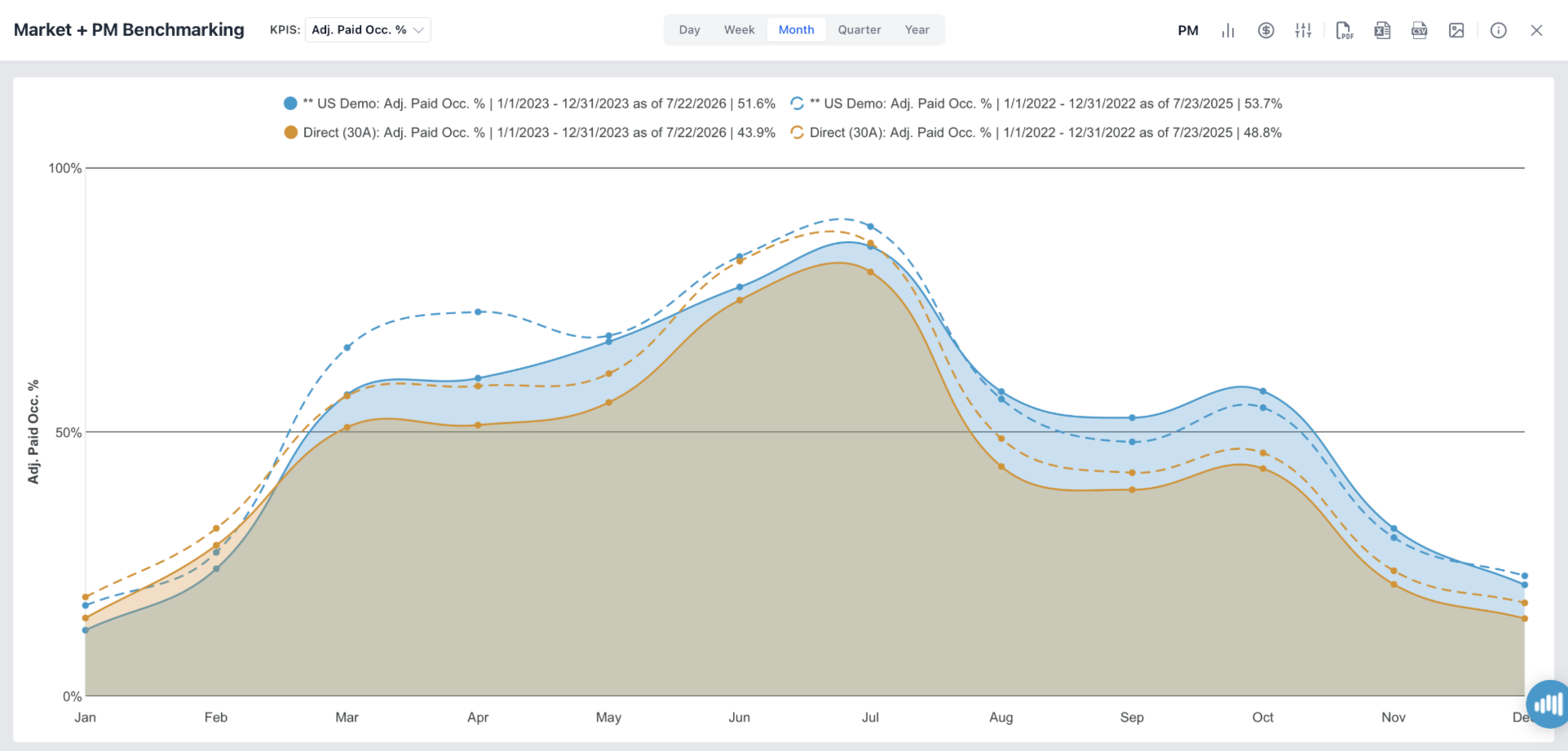
Performance is much easier to explain when owners can see what the rest of the market is doing. A decline in occupancy means something very different if the entire market experienced the same trend. Likewise, a property that’s outperforming professionally managed competitors may still be having an excellent year, even if results look slightly softer than the previous season.
Market + PM Benchmarking compares portfolio performance against direct-source market data from other professional property managers, adding context that individual property reports can’t provide on their own. Rather than telling owners the market changed, property managers can show them.
PM Scorecard
Not every owner wants a detailed report every month.
Some simply want to know whether performance is tracking in the right direction.
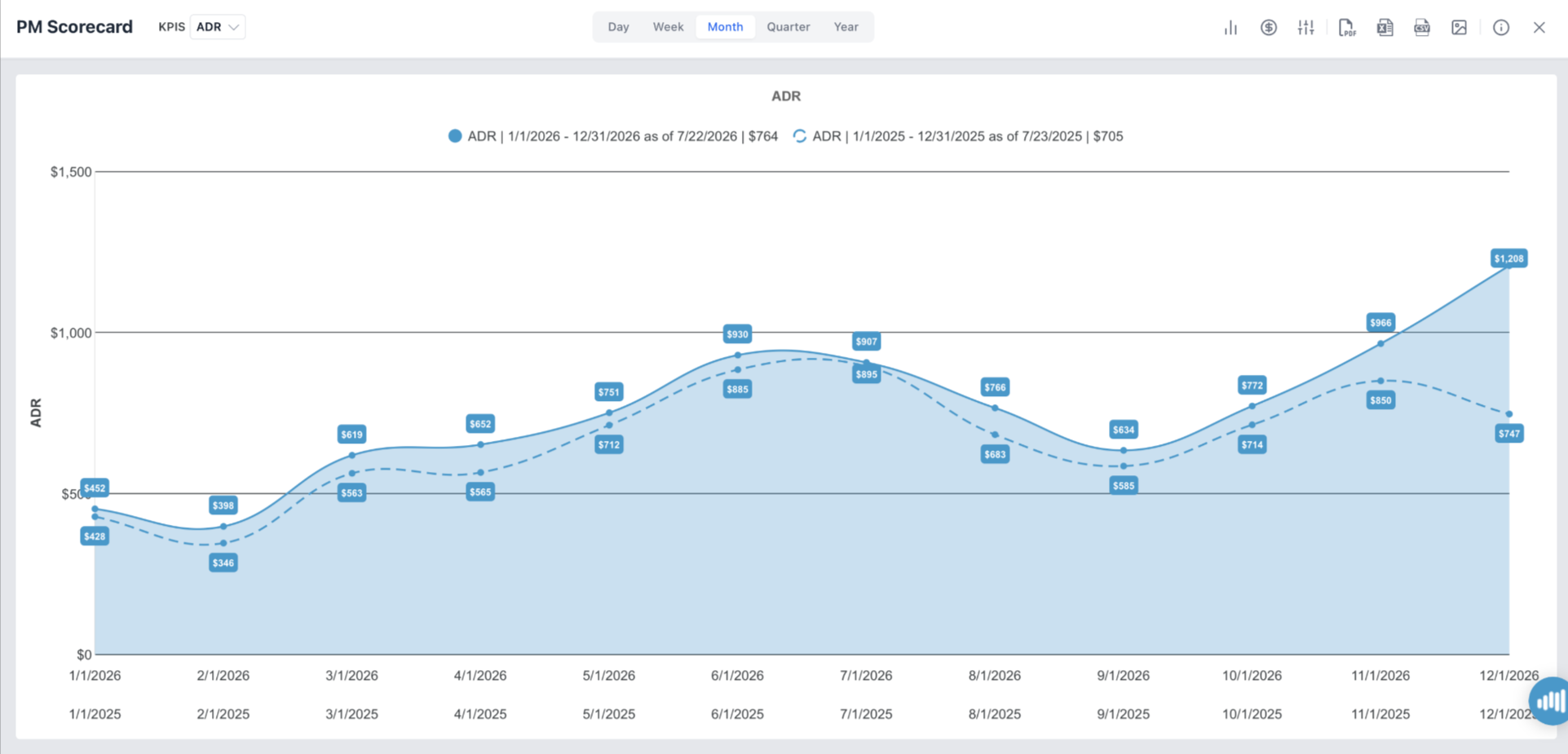
The PM Scorecard provides a concise summary of key performance metrics, making it a useful report for routine updates or executive-level reviews. It gives owners a quick understanding of performance without requiring them to sort through pages of detail.
For many property managers, it’s also an easy way to begin owner meetings before moving into more detailed discussions.
Unit Leaderboard
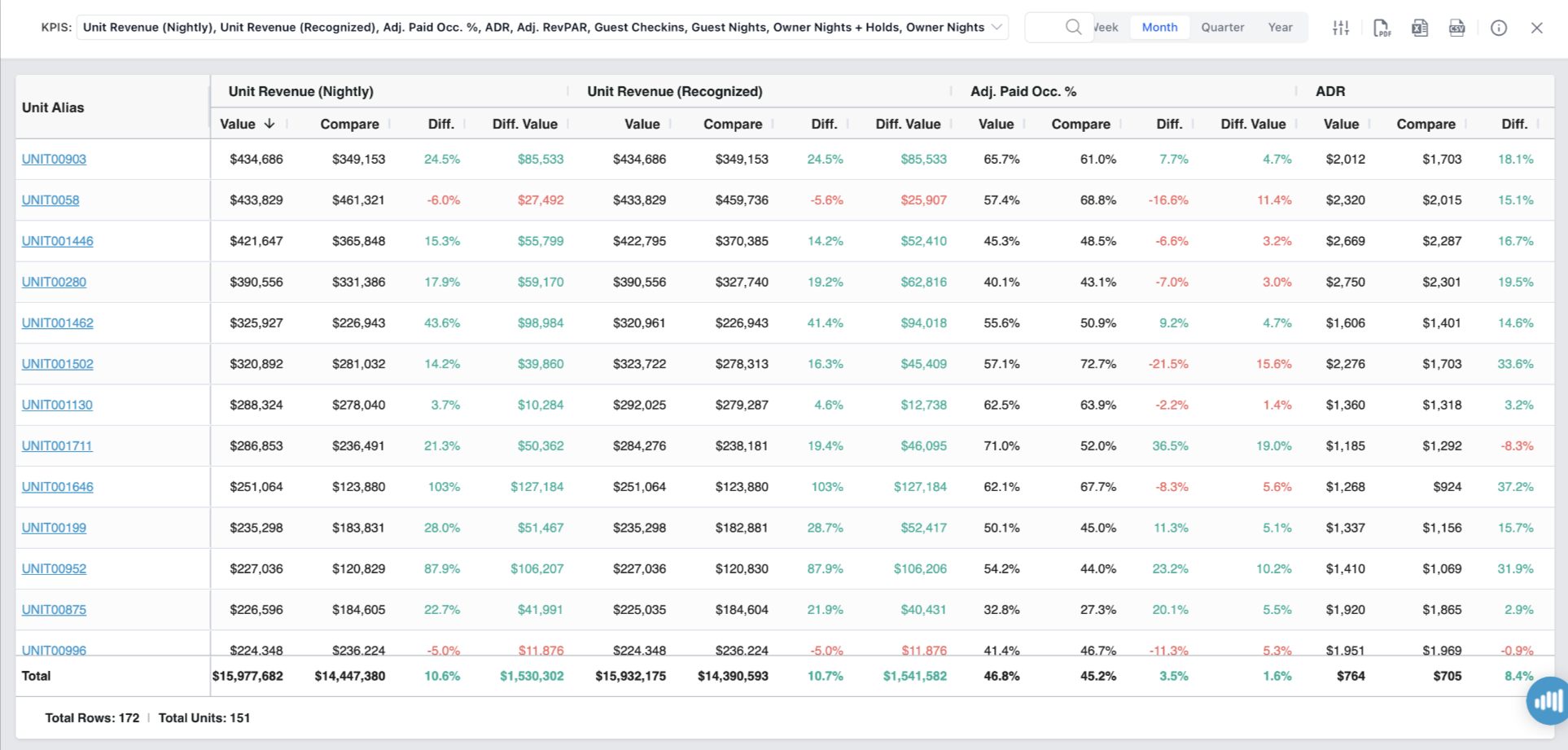
Owners with multiple properties often ask a different set of questions than single-property owners. Which home generated the most revenue? Why is one property outperforming another? Are there opportunities to improve the lower-performing units?
The Unit Leaderboard helps answer those questions by ranking properties across the portfolio. Performance differences become much easier to identify, creating an opportunity to discuss pricing, amenities, availability, or marketing strategies that may be influencing results. Instead of reviewing each property individually, owners can see how the portfolio performs as a whole.
Market Scorecard
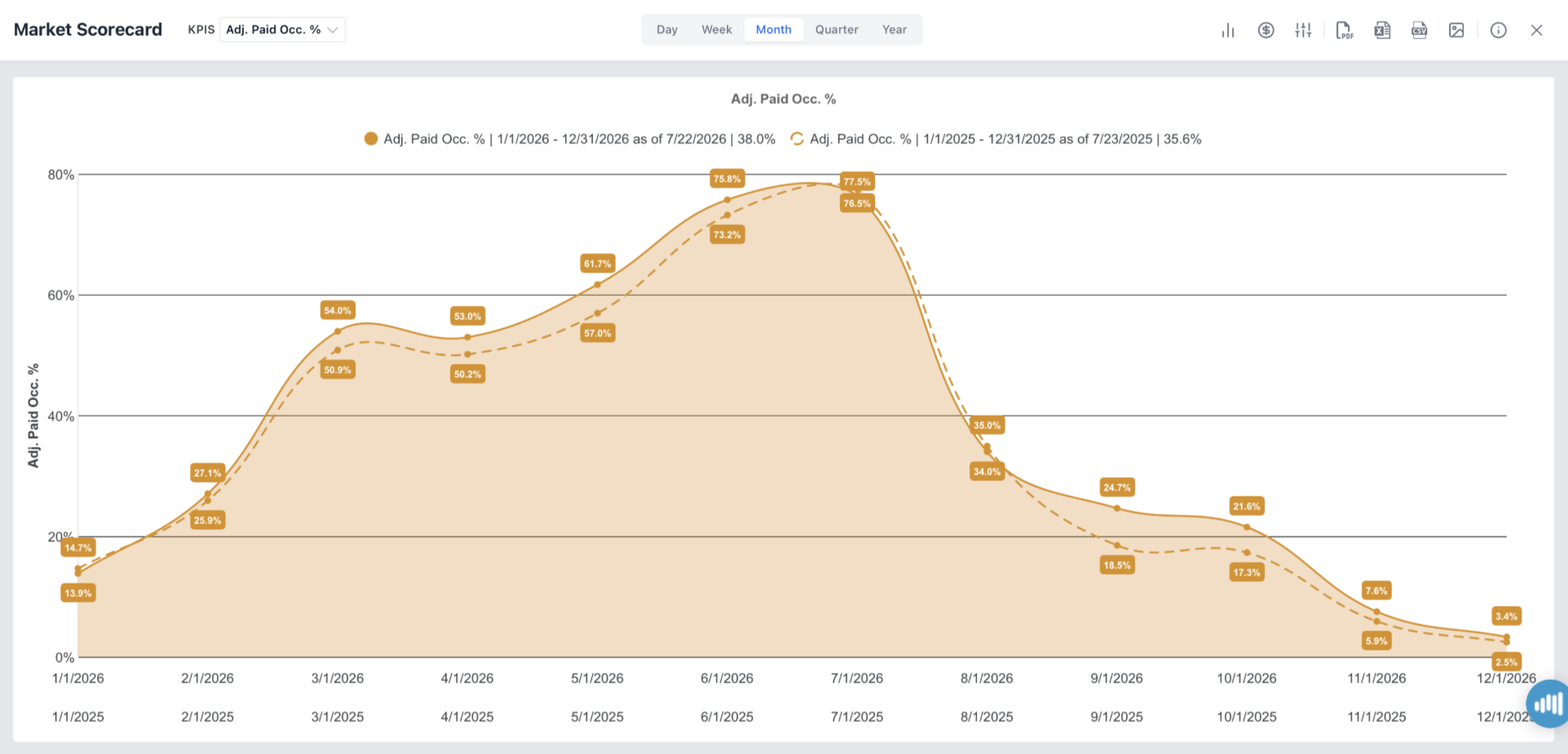
Even the strongest property can be affected by broader market conditions. Changes in demand, occupancy, or pricing across a destination influence every property manager’s conversations with owners throughout the year.
The Market Scorecard summarizes those broader market trends, giving owners a better understanding of the environment their property is operating in. It’s particularly useful during annual reviews or seasonal planning conversations, helping explain not only what happened, but why.
Better Reporting Builds Better Owner Relationships
Owner reporting isn’t about sending more reports. It’s about giving owners a clear understanding of how their property is performing and the market conditions influencing those results.
Combining property performance with market benchmarks creates more productive conversations, provides context when performance changes, and gives owners confidence that their investment is being actively managed. For property managers, that often means greater transparency, stronger owner relationships, and better long-term retention.
KeyData’s owner reporting brings those insights together, making it easier to deliver consistent updates that owners can understand and trust.
Frequently Asked Questions
What reports should property managers share with vacation rental owners?
Many property managers regularly share Owner Reports, portfolio scorecards, market benchmarks, and property performance summaries. Together, these reports help owners understand how their investment is performing and how it compares with the broader market.
Why is market benchmarking important for owner reporting?
Market benchmarking provides context. It helps explain whether changes in occupancy, revenue, or rates are unique to an individual property or reflect broader market conditions affecting comparable vacation rentals.
What information should an owner report include?
Most owner reports include revenue, occupancy, guest nights, check-ins, and year-over-year comparisons. These metrics provide owners with a clear summary of property performance without requiring them to interpret operational data.
How often should property managers send owner reports?
Many property managers provide owner reports monthly, with more comprehensive performance reviews conducted quarterly or annually. A consistent reporting schedule helps keep owners informed and reduces ad hoc requests for updates.
Why should owners see market performance alongside property performance?
Property results are influenced by broader market conditions. Showing both together helps owners understand whether performance changes are property-specific or part of a larger market trend.
What is a Unit Leaderboard?
A Unit Leaderboard ranks properties within a portfolio based on performance metrics. Property managers often use it with multi-property owners to identify top-performing homes and highlight opportunities for improvement across the portfolio.
How does better reporting improve owner relationships?
Clear, consistent reporting builds transparency and trust. When owners understand both their property’s performance and the market conditions behind it, conversations become more productive and expectations are easier to manage.





