.png)


Key Takeaways
- Revenue management decisions are stronger when they’re grounded in market trends rather than portfolio performance alone.
- Looking at demand from multiple angles (market benchmarks, pacing, booking behavior, and booked revenue) creates a more complete picture than any single KPI.
- A consistent reporting routine helps identify meaningful changes in the market before they show up in occupancy alone.
There is no shortage of data available to revenue managers. The challenge is deciding which reports deserve your attention. Looking at too much data can be just as unproductive as looking at too little, especially when multiple reports are telling slightly different stories.
Most pricing decisions come down to answering a handful of questions. Is performance changing because of the market or because of my portfolio? Is demand building normally? Are guests booking differently than they were a year ago? Are we pacing toward our revenue goals?
These five reports answer those questions consistently and provide a well-rounded view of market performance without getting lost in the noise.
1. PM Market Leaderboard: Start with the Right Benchmark
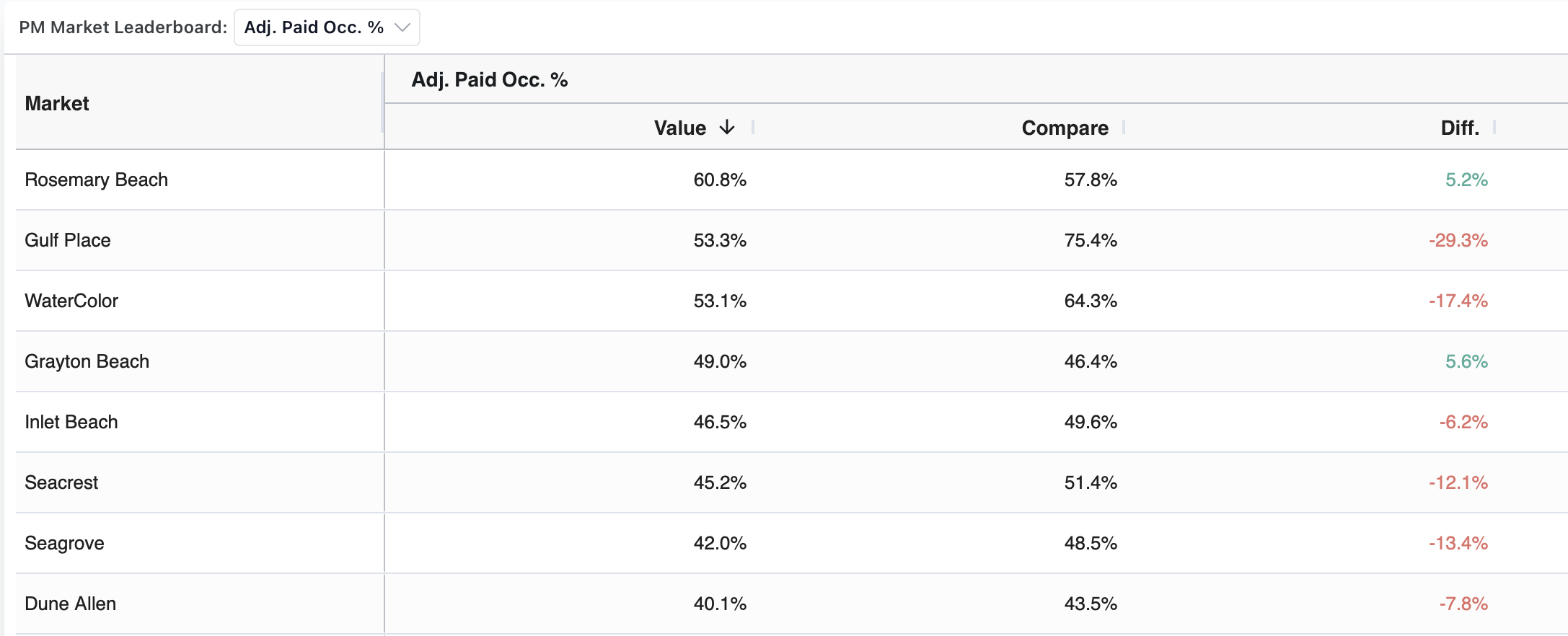
Market context should come before pricing decisions. It’s difficult to know whether your portfolio is outperforming or underperforming without understanding what’s happening across comparable professionally managed inventory. Benchmarking against publicly listed OTA properties often creates more questions than answers because advertised availability and pricing don’t reflect actual booking performance.
The PM Market Leaderboard compares your portfolio against direct market data sourced from property management systems, offering a cleaner comparison of how professionally managed competitors are performing.
That distinction matters. If the entire market is pacing behind last year, your pricing strategy may not need significant changes. If comparable managers are outperforming while your portfolio falls behind, it’s a signal worth investigating.
2. Pacing Detail: Look Beyond Today’s Numbers
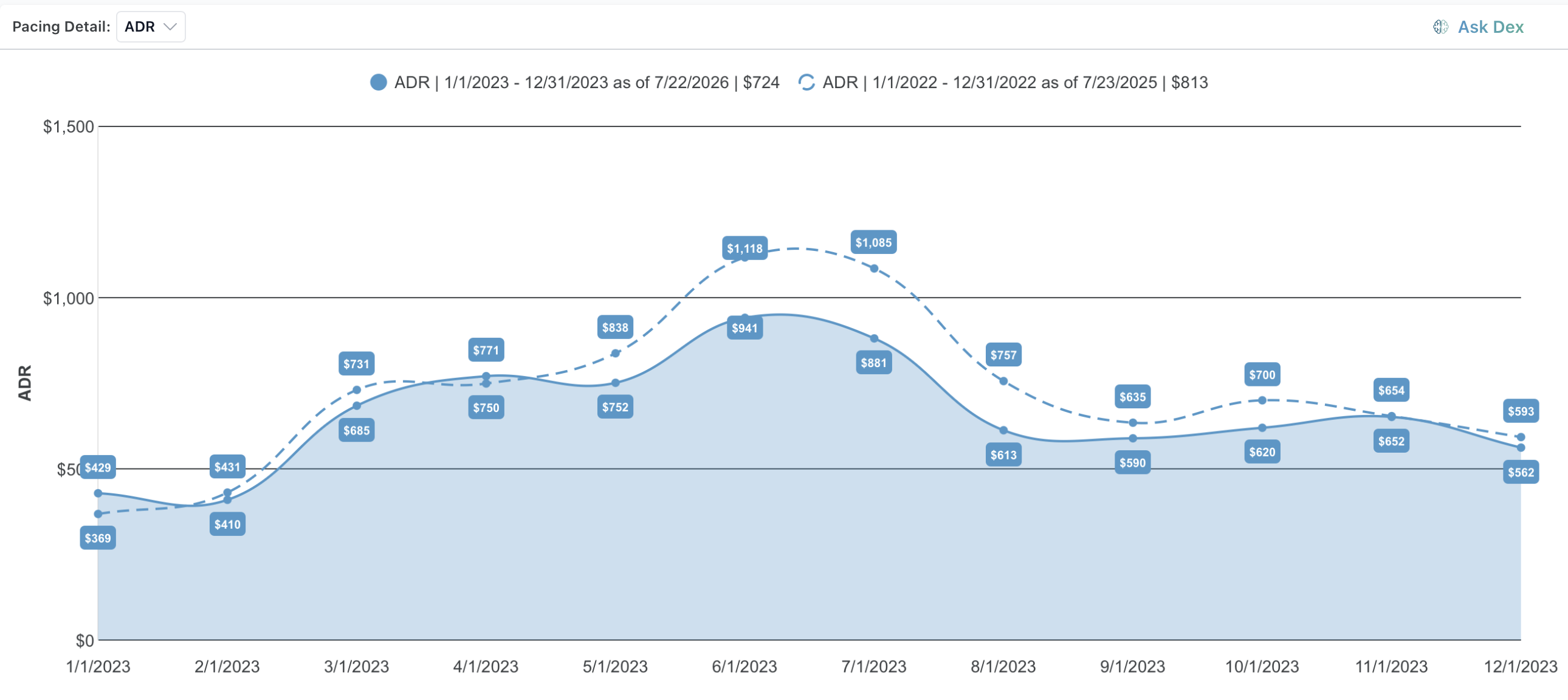
Daily booking activity is noisy. A slow Tuesday doesn’t necessarily mean next month is underperforming, just as a strong booking day doesn’t automatically signal improving demand. Looking at individual days in isolation often leads to reactive pricing decisions.
Pacing Detail tracks how bookings are accumulating toward future arrival dates, making it easier to identify whether demand is following expected patterns or beginning to drift.
Viewed over time, pacing provides a much clearer picture of booking momentum than occupancy alone and often highlights meaningful changes well before arrival dates.
3. Yield Curve Year-over-Year: Understand How Booking Behavior Is Changing
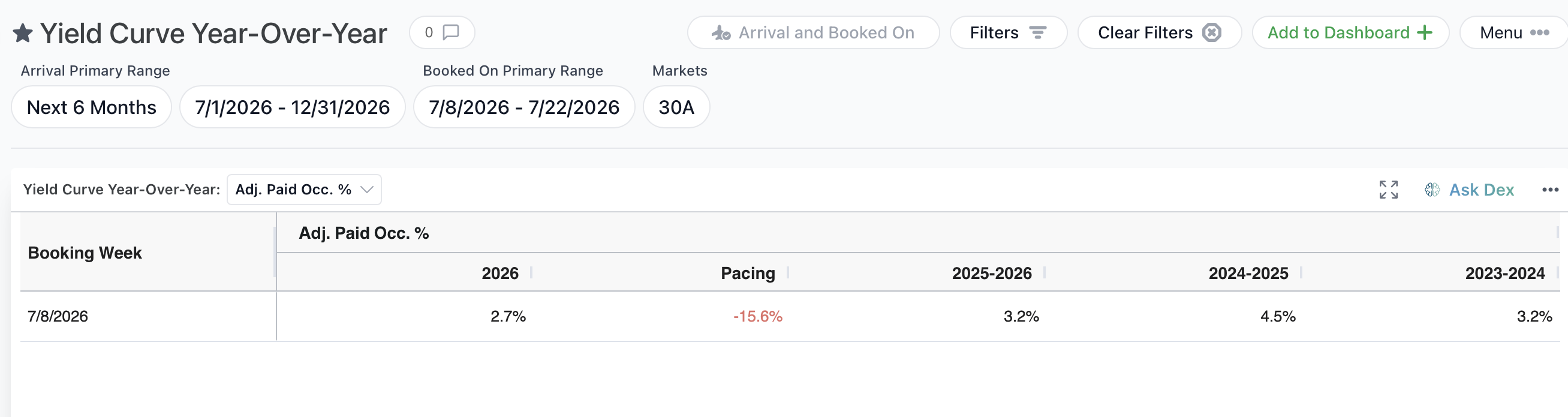
Demand doesn’t always arrive the same way from one year to the next. Some seasons build steadily months in advance. Others compress into the final few weeks before arrival. Those shifts have a direct impact on pricing strategy, particularly in markets where traveler behavior changes quickly.
The Yield Curve Year-over-Year compares booking pickup by weeks-out against the previous year, making those differences immediately visible.
Instead of reacting to lower occupancy at a single point in time, revenue managers can see whether bookings are simply following a different timeline or whether demand is genuinely lagging historical performance.
4. Reservations by Booking Window: Let Guest Behavior Guide Pricing
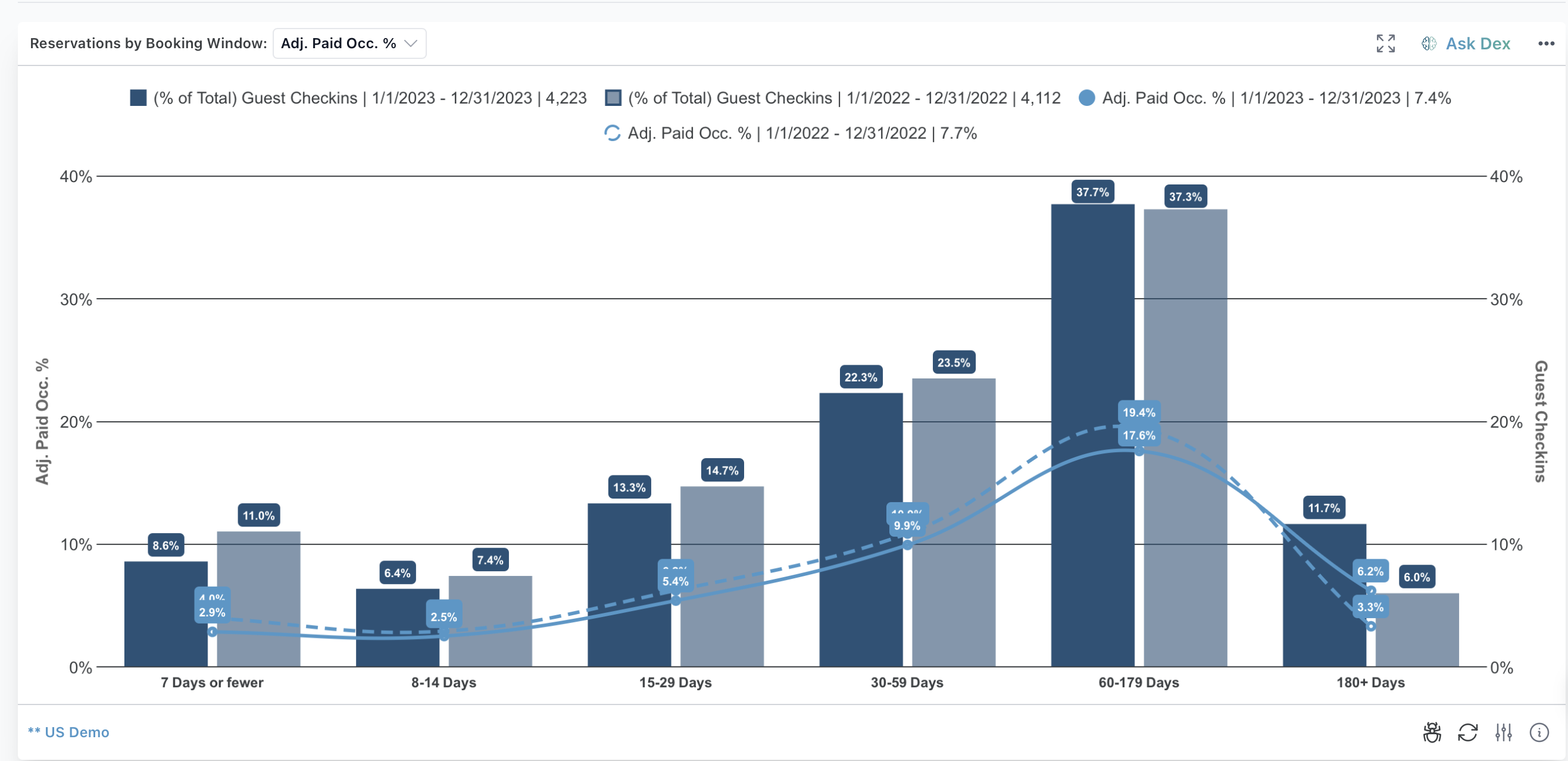
Booking windows influence far more than forecasting. They shape when rates are loaded, when promotional activity begins, and how aggressively pricing should be managed as arrival dates approach.
The Reservations by Booking Window report tracks how far in advance guests are making reservations, making it easier to recognize shifts in traveler planning behavior.
Longer booking windows often create more confidence in maintaining rates further into the booking cycle. Shorter booking windows require closer monitoring as arrival dates approach. Neither pattern is inherently better, but both require different pricing strategies.
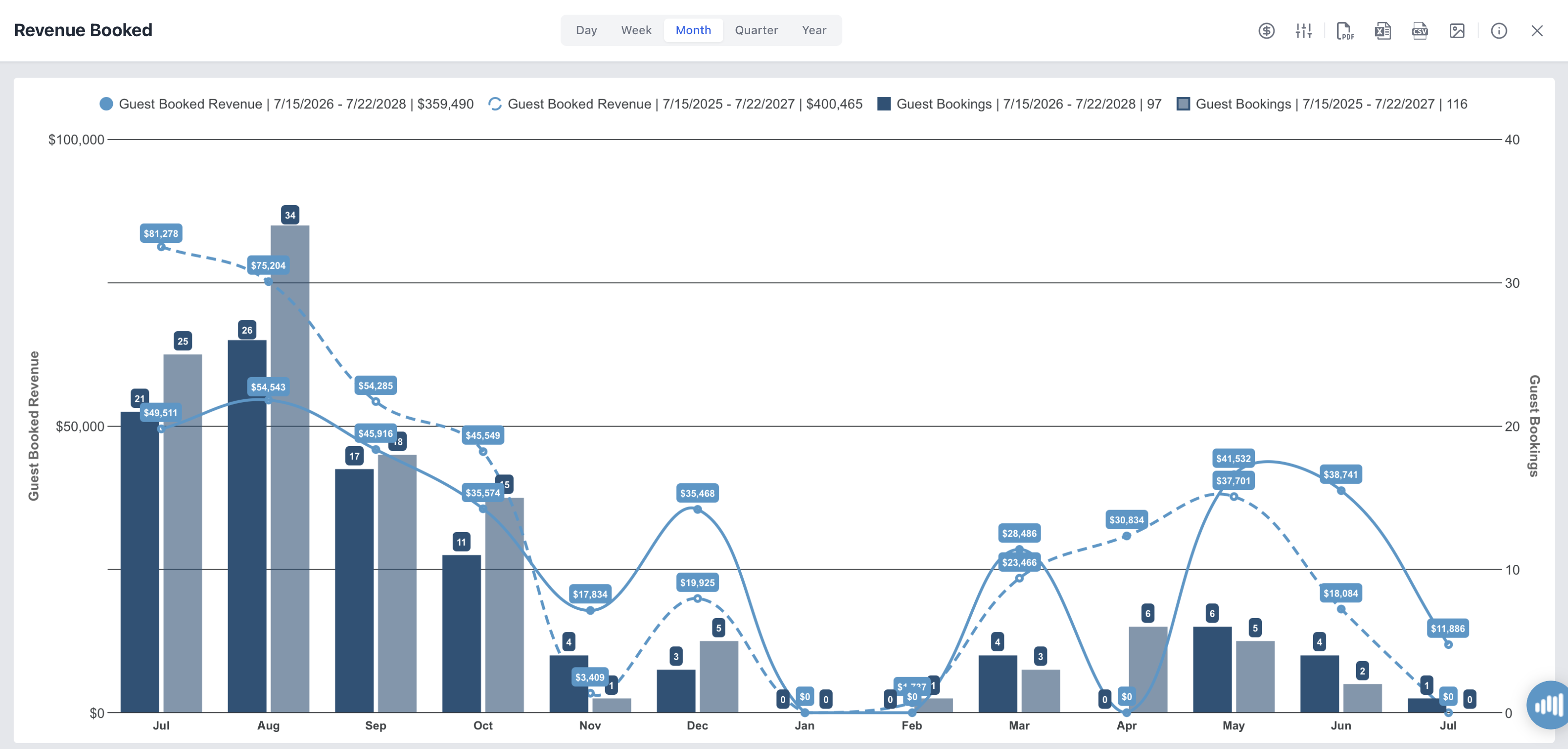
5. Revenue Booked: Forecast Revenue, Not Just Occupancy
Occupancy measures how much inventory has been sold. Revenue Booked measures how much business has actually been secured. Because the report tracks revenue based on booking date rather than arrival date, it provides a reliable view of booking momentum and supports both forecasting and pace-to-budget reporting.
Revenue and occupancy don’t always move together. Strong booking volume can still produce disappointing revenue if rates are discounted too aggressively, while modest occupancy growth may generate meaningful revenue gains when pricing remains disciplined.
Looking at both metrics together provides a more balanced view of performance.
Looking at the Full Picture
No single report should drive pricing decisions on its own. Market benchmarks explain competitive performance. Pacing highlights booking momentum. Yield curves reveal changes in booking behavior. Booking windows provide context around traveler planning, while Revenue Booked measures financial progress.
Each report answers a different question. Together, they provide a clearer understanding of what’s happening in the market and whether pricing strategy needs to change.
Make Every Pricing Decision with Better Context
Revenue management is rarely about reacting to one metric. The strongest decisions come from understanding how market performance, booking behavior, and revenue trends fit together.
KeyData’s revenue management reports provide that broader context, giving revenue managers the information they need to benchmark performance, monitor demand, and make pricing decisions with greater confidence.
Frequently Asked Questions
What reports should a vacation rental revenue manager review regularly?
Many revenue managers rely on a combination of market benchmarks, pacing reports, booking window analysis, booking pickup, and revenue tracking. Reviewing these reports together provides a more complete picture of market conditions than any single KPI.
Why is benchmarking against other property managers important?
Comparing performance against professionally managed portfolios offers a more accurate view of market conditions than advertised OTA listings because it reflects actual reservation data rather than publicly displayed prices and availability.
Why is pacing more useful than occupancy alone?
Occupancy shows where performance stands today. Pacing shows how bookings are developing toward future arrival dates, helping identify changes in demand before they become visible in final occupancy.
What is a booking window?
A booking window measures the time between when a reservation is made and when the guest arrives. Monitoring booking windows helps revenue managers understand changes in traveler behavior and adjust pricing strategies accordingly.
Why does Revenue Booked matter for forecasting?
Revenue Booked tracks revenue when reservations are made instead of when guests arrive. That makes it particularly useful for monitoring booking momentum, forecasting future revenue, and comparing pace against budgets or previous years.
How often should revenue managers review these reports?
Most revenue managers review these reports daily during active booking periods and at least several times a week throughout the year. Regular monitoring makes it easier to identify changes in demand before they materially affect performance.
Why shouldn’t pricing decisions rely on one report?
Every report captures a different aspect of performance. Market benchmarks, pacing, booking windows, and revenue trends each provide unique context. Reviewing them together leads to more informed pricing decisions than relying on occupancy or ADR alone.





